
One of the core insights we hold at All Common Ground is that every story has three sides: my side, your side, and the Truth. None of us sees with complete clarity. We all carry partial views, shaped by our past, our pain, and our perspective. Often, both sides are right, or at least factually correct from their perspective. We each interpret events through our own experiences and assumptions. The real challenge—and the opportunity—comes in recognizing that. The truth often lives in tension, and it takes great humility to listen well enough to see the humanity in the “other side.”
We acknowledge that everyone—on the left, on the right, and everywhere in between—has been misled by narratives or media spin at some point. Admitting that our side sometimes gets it wrong doesn’t make us weak. It makes us honest. And honesty is where peace begins.
This truth isn’t unique to any one tradition. It echoes across wisdom traditions and philosophies throughout history. Whether we’re discussing faith, politics, or personal relationships, the more we acknowledge what we don’t know, the more we can move toward connection instead of conflict.
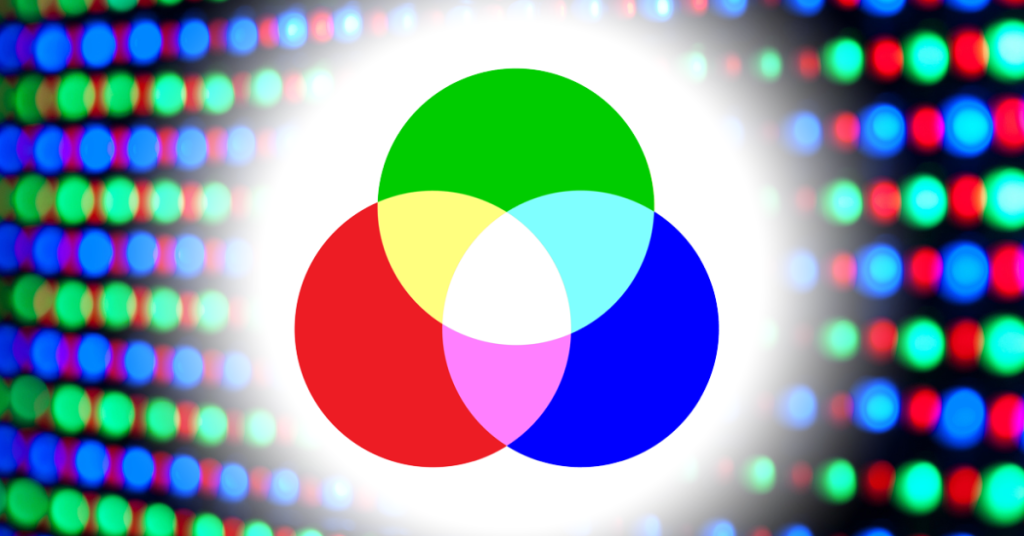
When you look at the All Common Ground logo, it might appear simple at first. But take a closer look, and you’ll begin to see the more profound message it carries. This isn’t just a design. It’s a visual symbol of everything we stand for: balance, presence, and the harmony that emerges when seemingly opposing parts come together.
The Three Colors of Light
Our logo draws from the primary colors of light used in screens and digital displays: Red, Green, and Blue. These are known as additive colors. When combined in total balance, they produce pure white light.
- Red, Green, and Blue each bring something essential.
- When two are combined, you get secondary colors like yellow, cyan, and magenta—beautiful, but still incomplete.
- Only when all three unite does full clarity and illumination emerge.
This is what we strive for at All Common Ground: not settling for partial truths, but seeking the kind of wholeness that only comes from embracing the full spectrum of perspective.
Mind. Body. Spirit.
These three colors also represent a deeper trio: Mind, Body, and Spirit. In many traditions, true insight and healing can only be found when all three are in balance.
- The mind brings understanding and thought.
- The body grounds us in presence and experience.
- The spirit animates us with love, purpose, and connection.
This balance has been honored across cultures and philosophies:
- Lao Tzu, in the Tao Te Ching, reminds us that “To know others is wisdom; to know oneself is enlightenment.”—a harmony of thought, feeling, and being.
- Buddha taught that suffering ceases when we follow the Middle Way—a balance between body discipline, mental clarity, and spiritual awareness.
- Carl Jung spoke of wholeness not as perfection but as integration: “I’d rather be whole than good.”—calling us to embrace the full self: mind, body, and soul.
When these aspects of our humanity are in right relationship, we begin to see clearly—not just with our eyes, but with our hearts.
For our Christian participants, this idea resonates deeply. As Jesus said in Matthew 6:22-23:
“The eye is the lamp of the body. If your eyes are healthy, your whole body will be full of light.”
And in the wisdom of the Hebrew scriptures:
“A cord of three strands is not easily broken.” —Ecclesiastes 4:12 We begin to see clearly—not just with our eyes, but with our hearts.
For our Christian participants, this idea resonates deeply. As Paul writes in 1 Corinthians 13:12:
“For now we see only a reflection as in a mirror; then we shall see face to face. Now I know in part; then I shall know fully, even as I am fully known.”
And as Jesus said in Matthew 6:22-23:
“The eye is the lamp of the body. If your eyes are healthy, your whole body will be full of light.”
Or in the wisdom of the Hebrew scriptures:
“A cord of three strands is not easily broken.” —Ecclesiastes 4:12
Always 3 Sides: A Symbol for Reconciliation
While this logo represents All Common Ground as a whole, its message of unity and balance is especially relevant to our branch, Always 3 Sides, where we engage with complex and often divisive topics. The logo’s colors remind us that truth and understanding are rarely found at the extremes. Red and Blue may oppose, but without Green—a third presence, a spirit of grace and openness—we remain stuck in contrast, not clarity.
Green at the top is our way of saying: growth comes from balance. Light comes from unity. And wisdom emerges when we listen not to “win,” but to understand.
A Logo That Invites You to See Differently
The shape and arrangement of our logo are designed to reflect more than aesthetics. With Green at the top, we’re expressing a value system that prioritizes growth, healing, and harmony over polarization or dominance.
This isn’t a political statement. It’s a human one. It’s not a brand. It’s a belief:
That love, humility, and open-hearted dialogue will always shine brighter than argument or ideology.
So when you see our logo, remember this: it’s more than color and shape. It’s a reminder that clarity only comes when we welcome every part of the spectrum—mind, body, spirit; red, blue, green; us, them, and something greater than both.
And more than anything, this logo is a quiet invitation: the person wearing it is a peacemaker. Someone open to helping, listening, and engaging across differences. It’s not a symbol of who we’re against—it’s a signal of who we’re for: anyone willing to lead with love, even when it’s hard.
We hope that when wearers see each other—online or in person—a conversation begins—a connection forms. And something new takes root.
Beyond Symbols: A Culture of Connection
In today’s polarized media climate, symbols that once stood for unity often become divisive. The MAGA hat, for example, evokes strong reactions—but many who wear it are not hateful or extreme. Similarly, while the Pride flag was once a bold symbol of inclusion, its continual evolution has caused some in the LGBTQ community to step back, feeling the movement no longer reflects their experience.
What both sides often miss is that division is profitable. Many podcasts and creators—left and right—sell their message alongside merch, slogans, and outrage. It’s not just about beliefs anymore. It’s about branding division.
Recent data shows more Americans than ever are rejecting rigid political identities. 43% now identify as independent, the highest number recorded by Gallup. Pew also reports that 62% of Americans view those on the opposite political side as more immoral than other citizens, a number that continues to rise.
All Common Ground exists to break that cycle. Our logo is a quiet but clear refusal to be pulled into extremes. It is a call to see people—not caricatures. To pursue presence, not performance. And to remember: unity doesn’t mean sameness. It means choosing connection, even when it’s hard.
Some will misunderstand our stance on things like universal reconciliation. That’s okay. We don’t expect everyone to agree with us. But we do expect that if we truly follow the call to love our neighbor—even our enemy—then no one should be rooting for another person to be condemned forever. That’s not what love does.
So wear the logo boldly. Let it represent not just an idea, but a way of being. Though it originates with All Common Ground, we use it across all our branches and communities as a symbol of welcome, reflection, and shared humanity. Whether you’re part of Always 3 Sides, Free Indeed, or Love AllWays, this logo stands for our common hope: that peace, not polarization, will guide the way.
Let it mean something. Let it start something.
Welcome to the light of Common Ground.