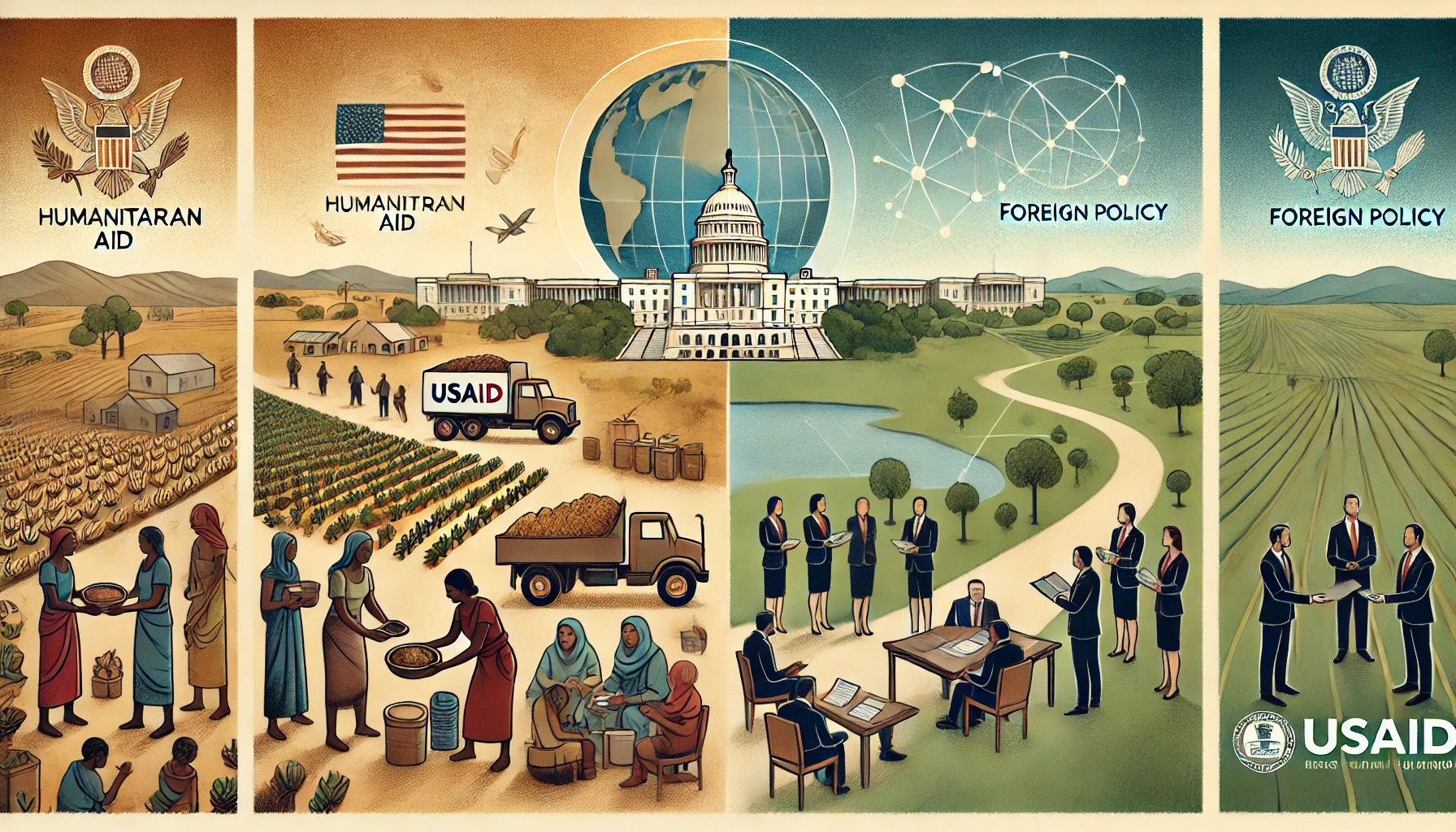
The United States Agency for International Development (USAID) is a government agency responsible for administering civilian foreign aid and development assistance. It was established in 1961 by President John F. Kennedy to advance U.S. foreign policy objectives through economic development, humanitarian aid, and democratic institution-building. USAID’s mission is to reduce poverty, strengthen democratic governance, and respond to global crises while fostering economic growth and sustainable development.
How USAID Functions:
- Development Programs: USAID funds and manages initiatives in health (e.g., combating diseases like HIV/AIDS), education, agriculture, infrastructure, and disaster response.
- Humanitarian Assistance: The agency provides emergency relief during natural disasters or conflicts.
- Democracy Promotion: USAID supports civil society organizations, independent media, electoral processes, and judicial reforms in developing countries.
Political Agendas and USAID’s Role
USAID is often seen as an instrument of U.S. foreign policy. While its stated goals are altruistic, critics and observers have noted ways it has been used to further U.S. geopolitical and ideological interests:
Democracy Promotion as a Foreign Policy Tool:
USAID frequently supports pro-democracy movements in countries with authoritarian regimes. While promoting democracy aligns with its mission, critics argue that the U.S. selectively engages based on strategic interests. For example
- In Eastern Europe and the former Soviet Union, USAID funded programs to promote democratic governance and market reforms after the Cold War to counter Russian influence.
- In Latin America, USAID has supported civil society groups opposing regimes considered adversarial to U.S. interests, such as Venezuela and Cuba.
Soft Power and Cultural Influence:
USAID projects often emphasize values like free markets, the rule of law, and human rights, which align with Western ideals. While many of these programs are genuinely beneficial, they can be perceived as imposing U.S.-centric ideals on other cultures
Economic Ties and Trade:
USAID development programs often encourage recipient countries to adopt policies favorable to U.S. businesses and investors. This includes promoting privatization or trade liberalization, which critics say can disproportionately benefit U.S. corporations.
Counterterrorism and Stabilization Efforts:
In conflict-prone regions like the Middle East, USAID has been involved in stabilization efforts that align with U.S. counterterrorism strategies. For instance
- In Afghanistan, USAID worked to build infrastructure and institutions, aiming to undermine support for the Taliban and promote pro-Western governance.
- In Iraq, USAID funded reconstruction efforts following the U.S. invasion in 2003.
Criticism of Covert Activities:
Some critics argue that USAID has occasionally been used as a front for intelligence operations. For example
- In Cuba, USAID reportedly funded covert programs aimed at destabilizing the government, such as efforts to create a “Cuban Twitter” network for dissidents.
- In Bolivia, former President Evo Morales expelled USAID, accusing it of meddling in the country’s internal politics.
Balancing Humanitarianism and Geopolitics
While USAID has undeniably contributed to global development and saved countless lives, its dual role as a humanitarian agency and a tool of U.S. foreign policy can create tension. Recipients may view its initiatives suspiciously, especially when aid appears conditional on political alignment.
Finding Common Ground
USAID’s activities highlight the complexities of balancing moral responsibility with strategic interests. Open discussions about its role can:
- Explore ways to improve the transparency of its programs.
- Ensure aid prioritizes long-term, locally-driven development rather than short-term political goals.
- Acknowledge its successes while addressing concerns about undue influence.
Fostering dialogue about USAID’s role can help Americans and global citizens better understand how humanitarian efforts and geopolitical goals intersect.