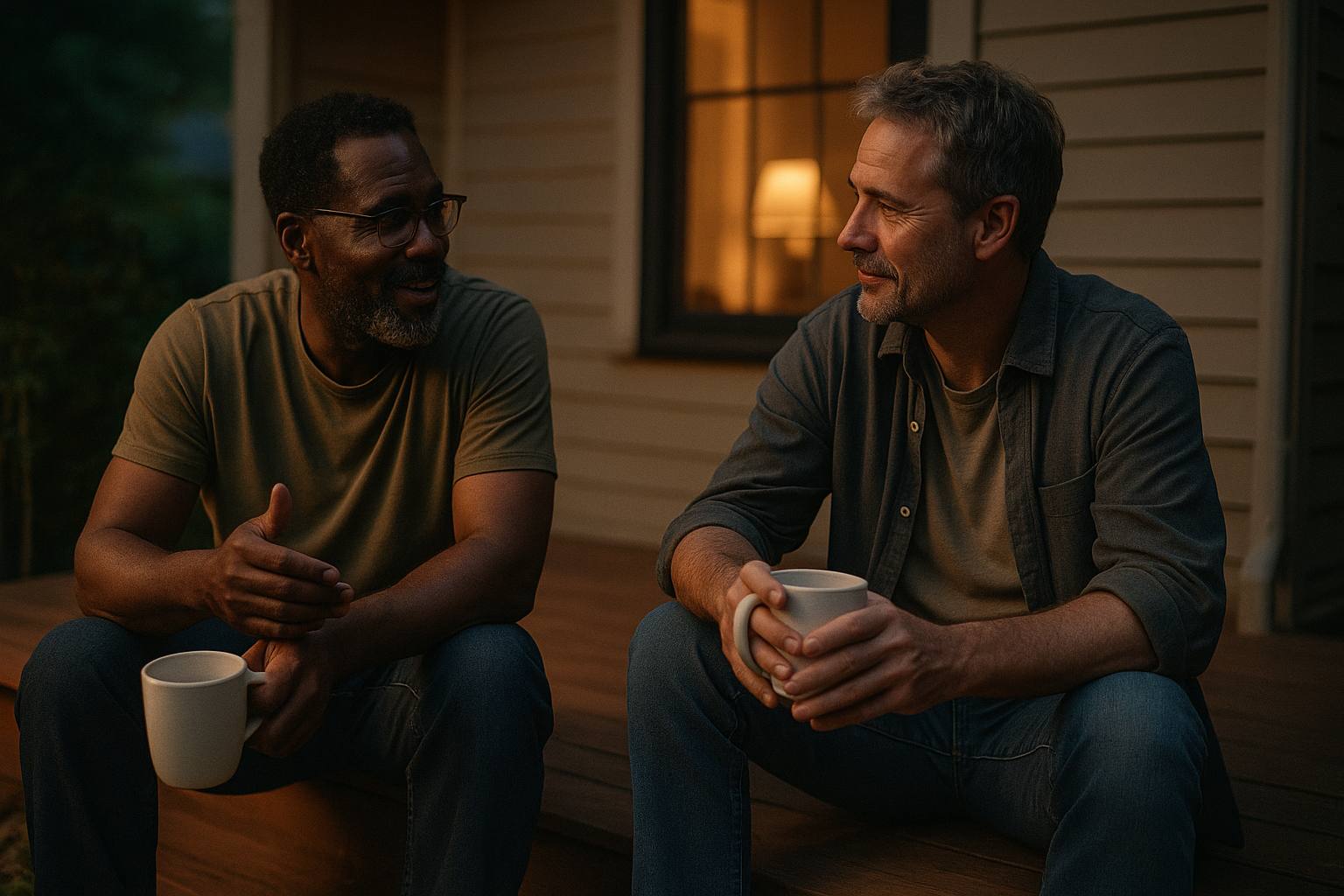
Friendship, Politics, and the Quiet Cost of Cultural Division
There’s a silent epidemic spreading—not of illness or economic collapse, but of something deeper: loneliness, especially among men.
In recent years, study after study has shown that men, particularly middle-aged and older, are facing deepening isolation. The U.S. Surgeon General has even declared it a public health crisis.
However, what is less discussed is why. And how the intersections of culture, politics, and home life may be playing a quiet but powerful role in male disconnection.
At All Common Ground, we believe these human stories need to be told—not to blame, but to reconnect.
📉 A Landscape of Loneliness
- Since 1990, the number of men reporting no close friends has increased fivefold.
- Men are far more likely than women to report feeling socially isolated.
- Suicide rates, addiction, and depression remain highest among men—especially those without strong relational support.
This isn’t just emotional—it’s physical. Chronic loneliness increases the risk of early death as much as smoking 15 cigarettes a day.
So what’s driving this? It’s not just aging. It’s something more cultural—and relational.
🏠 When Politics Come Home
Here’s something we hear often:
“I used to have friends I could talk politics or faith with. But now… if I say what I really think, I feel like I’m betraying my partner or upsetting the peace at home.”
In many relationships today—especially in progressive-leaning regions or university towns—men who are centrist or slightly conservative often find themselves partnered with women who lean strongly liberal.
This doesn’t have to be a problem. Difference can be beautiful. But when difference is seen as moral failure, or when silence becomes the only safe option, men often retreat inward.
They stop speaking freely.
They lose friendships that once affirmed who they were.
And in the name of keeping peace, they begin to feel invisible.
😶 Walking on Eggshells: The Fear of Saying the Wrong Thing
It’s not just about losing friends. Many men report feeling increasingly uncomfortable in social settings, particularly around their friends’ partners or spouses.
There’s a quiet fear:
“I don’t even know what I’m allowed to say anymore.”
These aren’t men looking to offend. They’re often trying to be kind, thoughtful, and inclusive. But the fear of social missteps—the wrong joke, the wrong opinion, the wrong tone—leads to self-censorship.
And that fear is isolating.
- Some men avoid group gatherings altogether.
- Others go silent in mixed company, unsure what’s safe to express.
- Many find themselves toning down their personality, slowly becoming someone they barely recognize.
Others do not exile them.
They’re withdrawing from themselves.
🔍 Is There Evidence for This?
While this isn’t often discussed in mainstream media, there is evidence:
- A 2020 study in Socius found that political alignment affects marital satisfaction—and misalignment can lead to relational stress and lost friendships.
- Pew Research highlights rising “political sorting” in friendships and marriages. When one partner shifts strongly in ideology, the other may feel pressure to follow—or fall silent.
- Men are less likely to address this openly. Instead of confrontation, they often choose quiet disconnection.
What starts as compromise can turn into self-erasure.
🧰 The Fragility of Male Friendship
Many male friendships are built around doing, not talking: sports, projects, work, hobbies.
But when those shared activities fade—or when the conversation becomes a minefield—men often have no fallback.
Unlike women, who are often socialized to maintain emotionally open relationships, most men haven’t been taught to say:
- “I miss you.”
- “I need support.”
- “I’m hurting.”
So they go without.
And they suffer silently.
🌱 A Way Forward: Rebuilding Real Connection
This isn’t about blame. It’s about healing, naming something real, and choosing a better path forward.
Here’s where we begin:
1. 🧑🤝🧑 Create spaces that aren’t ideological battlegrounds
Men need places to gather where political conformity isn’t a condition for belonging.
Connection can thrive in a shop, a backyard, a hiking trail, or a small group rooted in shared humanity—not sameness.
2. 💬 Normalize emotional honesty
We need to unlearn the myth that vulnerability is a sign of weakness.
Strength is being able to say, “I’m not okay,” and still be loved.
3. 🕊️ Make room for respectful disagreement
Relationships—romantic or platonic—don’t require total alignment.
They require respect, shared purpose, and space to breathe.
4. 🛠️ Build shoulder-to-shoulder community
Sometimes, the best way to reconnect is by doing something together, such as helping a neighbor, building a table, mentoring a teenager, or serving others side by side.
💛 A Gentle Invitation
If you’re a man who’s felt this—if you’ve lost friends, gone quiet in your own home, or feel like you no longer fit anywhere—know this:
You are not alone.
At All Common Ground, we don’t ask what party you belong to.
We ask:
- Are you willing to show up with honesty?
- Are you open to seeing others as whole people, not just opinions?
- Do you believe we’re better together?
Real community doesn’t start with agreement.
It starts with courage.
With presence.
With one honest moment at a time.
👣 Want to start or join a men’s group grounded in connection, not conformity?
We’d love to hear from you.
Reach out to All Common Ground, and let’s plant something real—together.