The Quiet Shift in Who Owns America—And Why It Matters to Us All
For generations, the dream was simple: work hard, buy a home, build a future.
But for more and more people today, that dream feels like it’s slipping further away—not because we’ve stopped working, but because the rules of the game have quietly changed.
Homes aren’t just homes anymore. In many communities, they’ve become investment vehicles.
Instead of families moving in, corporations are. And if we don’t start asking deeper questions now, we may wake up in a world where the very neighborhoods we cherish are controlled—not by neighbors, but by faceless firms driven by profit alone.
🧱 So… Who Owns the Block?
After the 2008 housing crash, something happened that most of us never saw coming.
Large investment firms—names like BlackRock, Vanguard, and State Street—stepped in while the market was hurting. With endless capital and little competition, they started buying up thousands of homes.
Not just condos or commercial buildings—single-family homes. The ones that used to be starter homes for young couples or a stable place for a growing family.
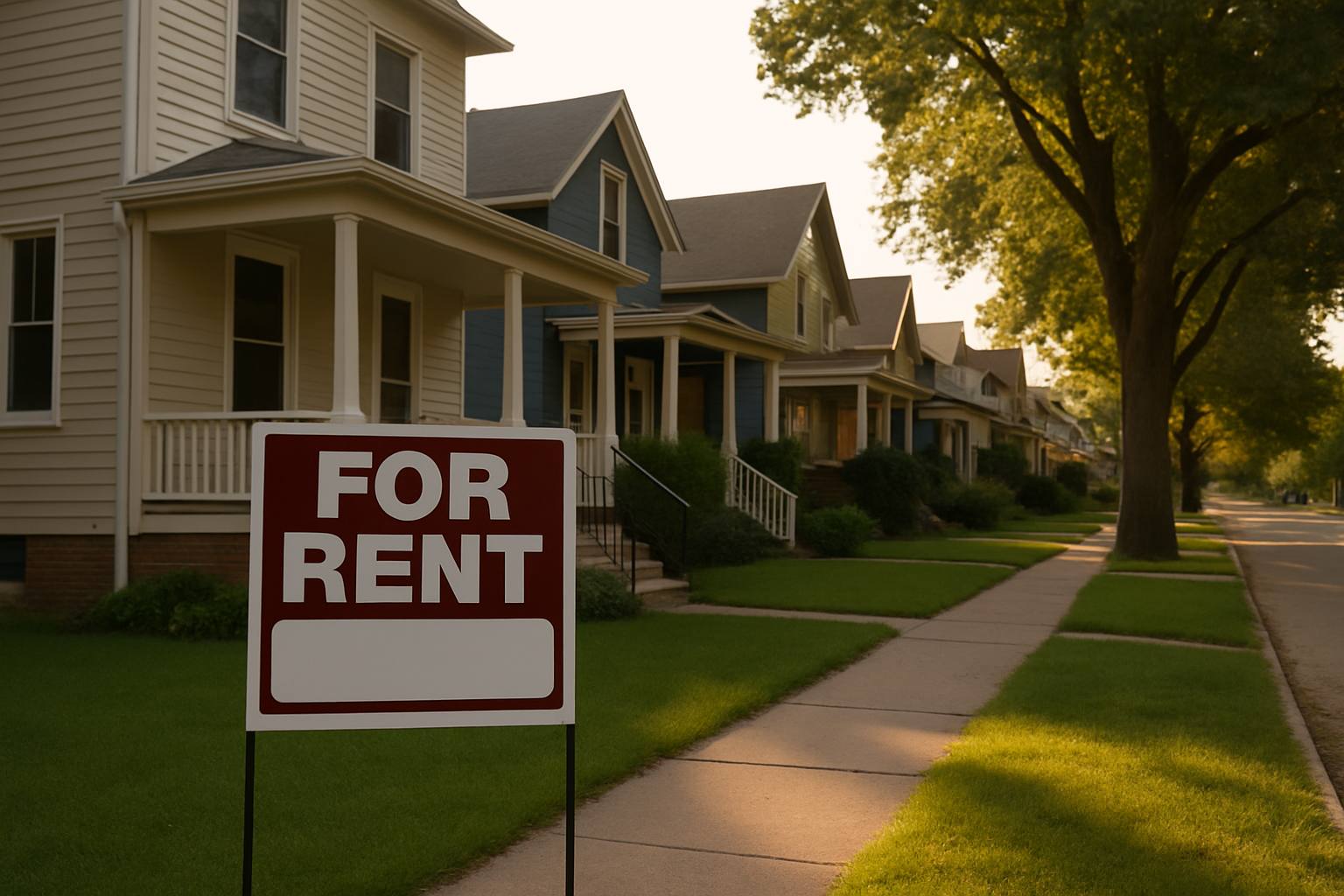
In many places, these firms now own large portions of neighborhoods. They can make all-cash offers most people can’t compete with, turning would-be homeowners into permanent renters.
This isn’t just about housing.
It’s about power—over where you live, how much you pay, and whether you get to stay.
🏗️ Is This “Development”? Or Displacement?
Picture this: a major company proposes a shiny new logistics center. It promises jobs, growth, a better local economy. Sounds good, right?
But here’s the quiet part:
- The company already owns the land.
- They’ve bought up nearby homes too.
- They fund the businesses that will fill those jobs.
- They may even support the politicians who approve the deal.
If the project moves forward, what happens to the people already living there?
What happens when your home is suddenly “in the way”?
In places like China, this dynamic has played out in tragic ways—entire blocks have been demolished while a few holdouts, sometimes referred to as “nail houses,” remain as symbols of resistance. Those who refuse to sell are often pressured through intimidation, utilities are shut off, and even mysterious fires occur.
We’re not there in the U.S.—but when profit becomes more important than people, and people have nowhere else to go, we need to pay attention.
📦 When Efficiency Becomes Oppression
In Hong Kong, there are so-called “cage homes”—cramped living spaces the size of a closet. Rent runs between $75 and $350 a month. That sounds affordable… until you see it:
- 25–50 square feet per person
- Shared or in-room toilet and kitchen
- 4–6 people per unit
- No privacy. No peace. No dignity.
These aren’t temporary shelters. They’re full-time homes, tucked beneath the towers of wealth.
And yet—some residents still find joy. Not in things, but in each other. In community. In simple routines.
Here’s the difference:
A monk in a 10×10 room might feel free.
A factory worker in a cage might feel trapped.
It’s not about square footage. It’s about why you’re there—and whether you had a choice.
🧠 Could This Happen Here?
It’s easy to think, “That could never happen in America.”
But let’s look closer:
- In many cities, rents are rising faster than wages—especially where big firms dominate.
- Evictions are becoming automated, with tenants treated like line items, not people.
- Young families are locked out of homeownership—not because they’re lazy, but because the system is tilted.
- Entire suburbs are being bought up by national firms, creating permanent renter zones.
And when those same firms also own the stores you shop at, the companies you work for, and the farmland that grows your food…
What’s left that’s truly yours?
🧭 The Business Model Is Working—But for Whom?
This isn’t an accident. This is a strategy.
In boardrooms, leaders are told to scale fast, dominate markets, and maximize returns.
- Relationships? Optional.
- Ethical housing? Too expensive.
- Long-term community building? Only if the ROI looks good.
We used to regulate monopolies.
Now we call them “innovative.”
But what happens when efficiency is more important than empathy?
You get tech campuses beside tent cities.
You get “affordable housing” nobody can actually afford.
You get streets that look like neighborhoods—but feel like assets on a spreadsheet.
🤝 There’s Still Time to Choose a Better Way
The future isn’t set in stone. But it won’t shape itself.
If we care about community, we must act like it.
Here’s where we can begin:
- Support local ownership
Land trusts, co-ops, and first-time homebuyer support can keep homes in the hands of people, not portfolios. - Break up monopolies
No single firm should control the economy, the media, and your mortgage. - Demand transparency
Real estate shell companies and hidden LLCs need sunlight. Communities deserve to know who owns what. - Redefine “progress”
Not every block needs to be “redeveloped.” Some just need to be respected.
🛑 Final Reflection:
Are We Still Building a Future—or Just Maximizing Profit?
If we let a handful of corporations decide where we live, what we pay, and what counts as “development,” then we’re inching toward a world where we may exist—but never quite belong.
This isn’t about politics or economics alone.
It’s about something deeper:
👉 Who do we want to be?
👉 What kind of life are we building?
👉 And who gets to decide?
Because if we wait too long, we may find ourselves in a place where everything works—except the people.
And by then, the rent won’t really matter.
Because you won’t be the one choosing.