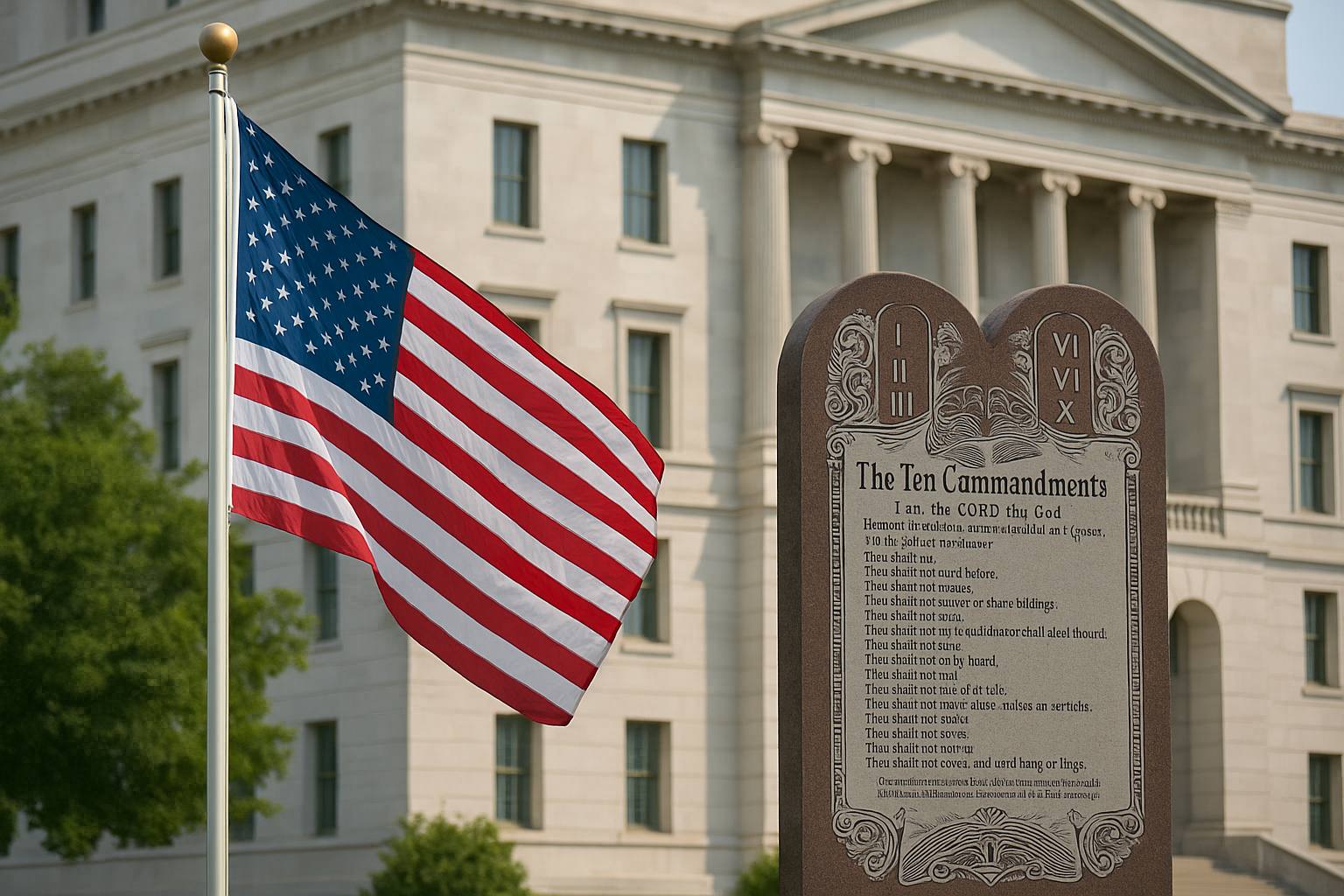
There’s a growing movement in America to blur the lines between Christianity and the state. From efforts to display the Ten Commandments in public schools to the rise of so-called Christian nationalism, the intention may seem noble to some—but I believe it’s spiritually and civically dangerous.
And I say that as a follower of Jesus.
America Wasn’t Built to Establish a Religion
One of the clearest lessons from history is this: when religion and government become entangled, both get corrupted.
The early settlers came here, in large part, to escape the enforcement of religious conformity. The Founders, although diverse in their beliefs, were united on one point: the state should not dictate religious expression. That’s why the First Amendment guarantees freedom of religion—not just freedom for Christians, but freedom for all.
To elevate the Ten Commandments in public classrooms is to suggest that Judeo-Christian morality should serve as the nation’s official guidebook. But what about Hindus, Buddhists, Muslims, Sikhs, atheists, or Indigenous traditions? Are their children less American? Less moral? Less welcome?
This isn’t just about fairness. It’s about what kind of society we are building.
God Doesn’t Need Government to Be God
The strange thing about Christian nationalism is how insecure it makes God look.
The Kingdom of God was never meant to be legislated. Jesus didn’t call on Rome to enforce His teachings—He called on individuals to live them—love, compassion, truth, and justice flow from changed hearts, not compulsory plaques.
When we force our faith into the public square through law or symbolism, we risk turning something sacred into something performative. And worse, we alienate those we are meant to love.
We are called to be salt and light, not judges and lawmakers.
The Ten Commandments Are Sacred—But Not Civic
I believe the Ten Commandments are a beautiful set of principles. They reveal timeless truths. But they are also deeply theological. The very first line—”I am the Lord your God”—is a declaration of exclusive religious allegiance. How can we force children from other traditions to honor that?
Imagine the reverse: What if a school in your district required Christian children to study Islamic teachings as moral law? Would that not feel like a violation of your deepest convictions?
We cannot defend religious freedom only when it’s convenient for our own faith.
True Christianity Doesn’t Require Cultural Dominance
There is a fear, I think, behind this movement—fear that Christianity is “losing ground.” But maybe that’s the wrong question.
Jesus didn’t come to win culture wars. He came to win hearts. He wasn’t interested in empire; He was interested in people. And He gave us the freedom to follow Him—or not.
If we believe our faith is true, then we shouldn’t need the state to prop it up. Truth can stand on its own.
A Better Way Forward
Let’s model a better kind of Christian witness—one that listens more than it lectures, welcomes rather than excludes, and trusts that love changes lives more effectively than laws ever could.
In a pluralistic society, our diversity is not a threat—it’s a test of our character. Can we love our neighbor even when they hold different beliefs? Can we protect their freedom just as fiercely as we would want ours protected?
I believe we can. I believe we must.
Because the real danger isn’t that America becomes less Christian. It’s that Christians forget what Jesus stood for in the first place.