Who Pays the Price?
In conversations about inflation, national debt, or the economy, it’s easy to feel overwhelmed—or worse, numb. We’re told it’s too complicated, too technical, too far above our heads. But the truth is, the systems that shape our financial lives were designed to be complex. And that complexity often hides a simple, painful reality:
The more we borrow as a nation, the more the working class pays the price.
A System Born in Secrecy
In 1910, on a secluded island off the coast of Georgia, a small group of bankers and politicians met in secret to design what would become the U.S. Federal Reserve System. This story, detailed in the book The Creature from Jekyll Island, sounds like fiction—but it’s not. These men weren’t conspiring in the shadows for the sake of drama; they were consolidating power, control, and influence over the nation’s money.
The Federal Reserve, established in 1913, was framed as a stabilizing force—meant to protect the economy from booms and busts. But critics argue that it’s done the opposite: enabling unsustainable government spending, fueling inflation, and quietly shifting wealth upward.
What Is Deficit Spending—and Why Does It Matter?
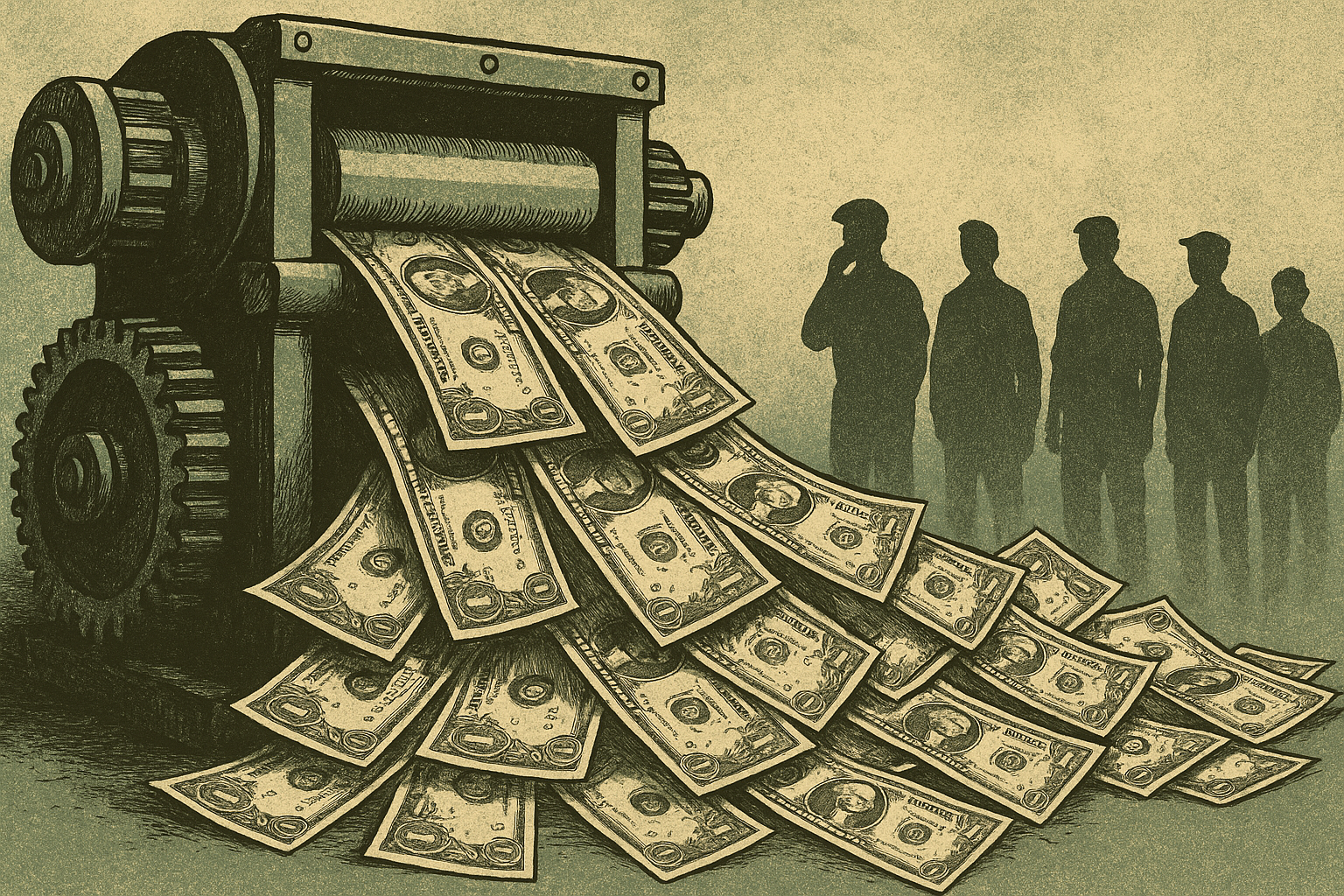
Deficit spending happens when the government spends more than it takes in. To cover the gap, it borrows—often by issuing debt that the Federal Reserve helps finance. On paper, this might look like a clever solution. But in practice, it’s more like passing a hidden tax onto ordinary people.
Here’s how it works:
- More borrowing = more money creation.
When the Fed “monetizes” debt, it increases the money supply. - More money = less purchasing power.
Inflation rises, making everything—from groceries to rent—more expensive. - Wages don’t keep up.
Most workers’ paychecks don’t rise at the same rate as inflation, meaning your money quietly buys less each year.
And while wealthier Americans can hedge against inflation through investments or real estate, working-class families often can’t. They feel the impact at the gas pump, in the checkout line, and when rent comes due.
Why It Feels Like You’re Working Harder and Getting Less
The result is a slow, invisible drain. People find themselves stuck in cycles of rising expenses, stagnant wages, and growing debt—not because they’re irresponsible, but because the system is tilted. Deficit spending feeds this system. It keeps short-term politics afloat while leaving long-term burdens on the next generation.
And when the bill comes due, it won’t be paid by those at the top. It will be paid in the quiet struggles of everyday people: parents skipping meals so their kids can eat, retirees going back to work, and families falling behind.
So What Can We Do?
At All Common Ground, we don’t claim to have all the answers. But we believe this: we deserve to understand the systems that shape our lives. Conversations about money, power, and policy don’t have to be divisive—they can be unifying, if we’re willing to dig beneath the surface.
This isn’t about left vs. right. It’s about transparency, accountability, and the simple belief that working people shouldn’t bear the weight of decisions they had no voice in.
Let’s bring these conversations closer to home—into our communities, our kitchen tables, our local gatherings. Let’s ask hard questions. Let’s tell the truth gently, but clearly. Let’s listen, reflect, and build something more just.