What Happens When Students Ask Big Questions… and Get Real Answers?
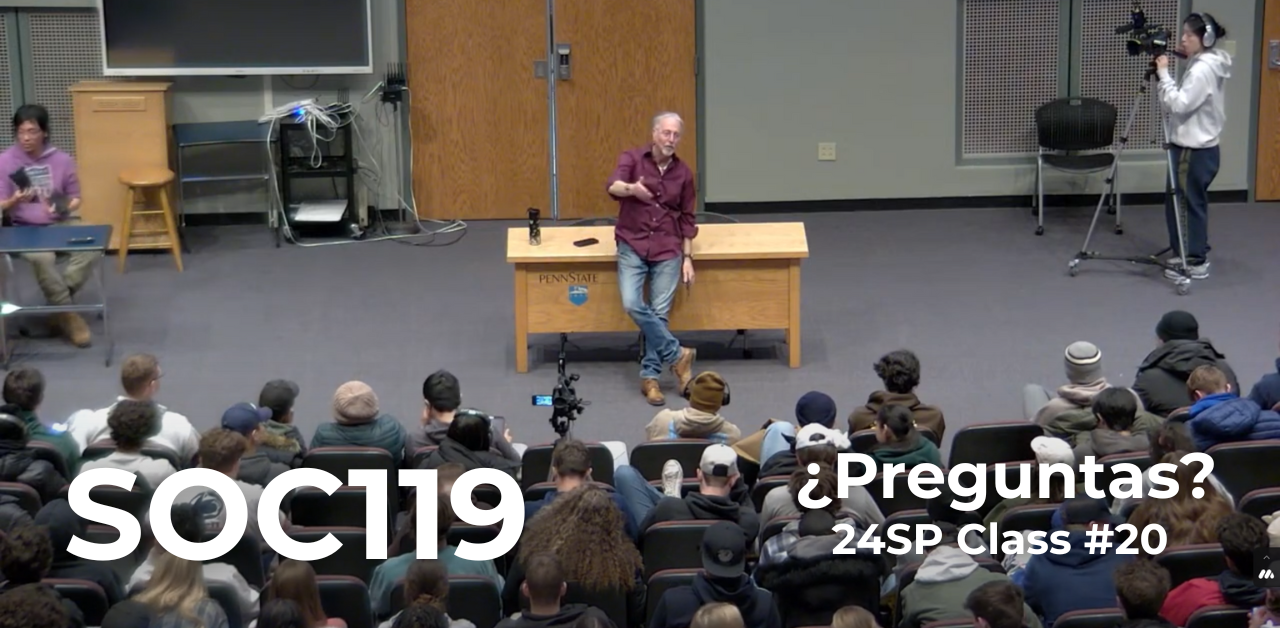
In a recent SOC119: Race and Ethnic Relations class at Penn State, students posed some of the most honest, raw, and relevant questions you’ll hear anywhere today. From “Is the world better off without organized religion?” to “Why do so many of us feel alone in a hyper-connected world?” the conversation flowed with curiosity, courage, and an openness that’s rare in polarized times.
The result wasn’t a tidy debate or a lecture with bullet points. It was something more human.
Below is a breakdown of the key topics discussed in the video (which we encourage you to watch in full). Some may surprise you. Some might challenge your assumptions. All are worth your time.
1. Would the World Be Better Off Without Organized Religion?
The professor makes a nuanced case: removing religion wouldn’t eliminate conflict—it would just move it. Humans are meaning-makers. Whether it’s religion or political ideology, we tend to rally around something.
What makes religion unique, though, is that it claims divine authority. “God is on our side” can be a force for justice or a force for destruction. It’s not that religion causes harm, but that people use it—like any tool—for their own ends.
2. The U.S. Role in Global Affairs: Savior or Superpower?
Another student asked about America’s involvement in global conflicts. The answer? The U.S. isn’t simply a reluctant hero or villain. It’s a deeply embedded force with hundreds of global military bases and a long history of interventions, some helpful, others harmful.
The challenge is holding both truths: American influence has done real good and real harm.
3. Social Media, Children, and Government Intervention
Should mothers be allowed to run social media accounts for their young kids? Especially when predators may be watching?
The class wrestled with the line between personal freedom and social responsibility. The takeaway: Some people can’t be trusted to make good choices. Regulation is coming—it’s just a matter of when, not if.
4. Child Beauty Pageants and Cultural Blind Spots
The professor shared a deeply personal (and uncomfortable) story about witnessing a child pageant in Arkansas. The story served as a lens into how normalized sexualization can be when seen through a sociological lens. Sometimes we only notice when we step outside our culture.
5. Are Genocide and Apartheid the Right Words?
Students questioned whether terms like “genocide” or “apartheid” accurately describe current events in places like Gaza. The professor emphasized the importance of historical precision: these are powerful words with specific origins. Misusing them risks diluting their meaning—even when the situation is dire.
6. Can Peace Ever Be Reached in Deep Conflict?
When talking about Israel and Palestine, one student asked if peace is even possible. The answer? Eventually, yes. All conflicts end. But the path to peace is never straightforward, and outside intervention often carries ulterior motives.
7. Loneliness in the Age of Social Media
Perhaps the most relatable moment came when students reflected on how lonely people feel despite constant digital connection. COVID made that reality painfully clear. The insight? We haven’t yet figured out how to build meaningful social structures in a digital age.
8. Do Older Generations Owe Gen Z an Apology?
A student asked the professor: Should your generation apologize for the housing crisis, emotional neglect, and tech addiction? The response was disarming: “Yeah, probably.” The professor traced many of these issues back to the deregulation culture of the 1980s. What seemed like freedom then has now come with real costs.
9. Why Are Men and Women So Divided Politically?
A student pointed to new data showing a growing gender gap in political views. The professor didn’t offer a concrete answer but encouraged reflection. This isn’t a black-and-white issue, but the divide is real—and worth understanding.
10. Free Speech vs. Campus Safety
Should controversial speakers be allowed on campus? The professor argued yes, noting that true danger is rare, and suppressing speech often amplifies it. Want to keep hateful ideas irrelevant? Don’t make them famous.
11. The Mullet Question (Yes, Really)
To lighten the mood, a student asked about mullets. The professor responded with a hilarious story from his 1980s rock band days. Because sometimes, after all the heavy stuff, you just need a laugh.
12. Political Labels vs. Individual Beliefs
Finally, a student asked why we reduce people to labels like “Democrat” or “Republican.” The answer? It’s a shortcut. It helps us make sense of the world. But it also flattens nuance. Most people don’t fit neatly into any box.
Why This Class Matters This wasn’t just a lecture. It was a live exploration of what it means to be human—to wrestle with belief, culture, justice, power, and belonging.
If you care about building real dialogue in a divided world, this is worth watching. Click play. Listen with an open heart. And maybe bring one of these questions to your next conversation.
Watch the full class below. Then share a comment: Which question hit you the hardest?